
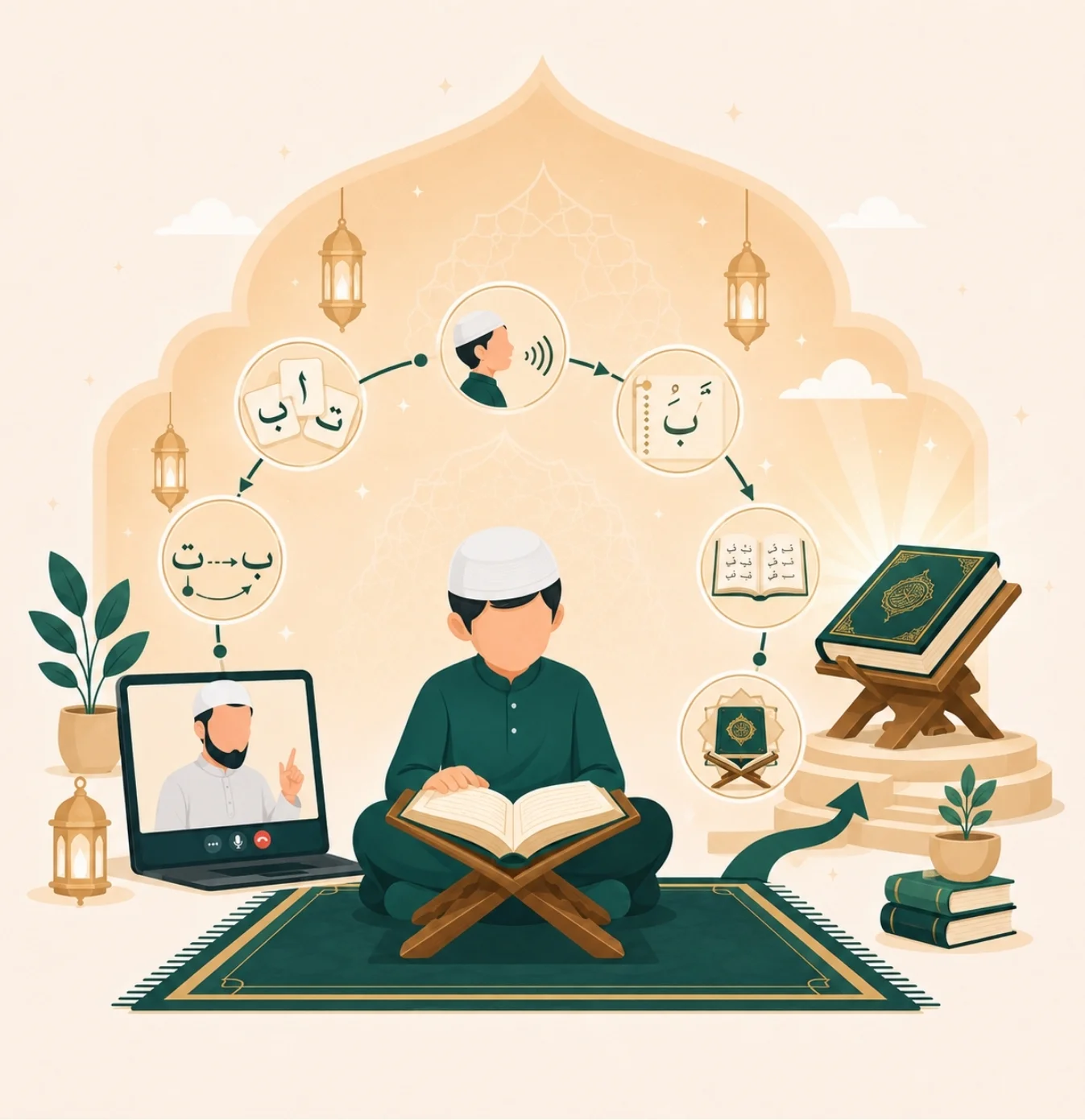
How the Hifz Program Actually Works Online
Hifz, the complete memorization of the Quran, is one of the most significant goals a Muslim family can set for their child. For generations it happened in dedicated boarding schools called madrassas, often far from home, with intensive daily schedules that few Western families could realistically manage.
That has changed. Online Quran memorization classes have made structured Hifz programs accessible to kids growing up in the United States, learning from home, without disrupting their school schedule or family life.
But how does it actually work? What does a child’s week look like inside an online Hifz program? How long does it take? And what does a US parent need to know before enrolling their child?
This article answers all of it, without the marketing language.
What Is Hifz, and What Does It Mean to Be a Hafiz?
memorized the entire Quran, all 114 Surahs, 6,236 verses, across 30 Juz (sections). This is not just a personal achievement. In Islamic tradition, a Hafiz holds a position of great honor, and their memorization is considered a form of preserving the Quran itself.
For children, the capacity to memorize is often strongest between ages 6 and 14, the brain’s plasticity during these years means patterns and sounds are absorbed and retained more readily than in adulthood. This is why most families who pursue Hifz begin during childhood.
| How Long Is the Quran?The Quran contains 30 Juz (parts). Most children in a structured online Quran memorization program memorize 1–2 pages per day, depending on age and session frequency. At that rate, completing the full Quran takes approximately 3 to 6 years, though many children complete individual Juz as meaningful milestones long before that. |
How Online Quran Memorization Classes Actually Work
The structure of an online Hifz program differs from a traditional madrassa, but the core methodology is the same: new memorization, daily revision, and consistent teacher assessment. Here is what a typical week looks like for a child in an online Hifz program:
Daily New Memorization (Sabaq)
Each session begins with the child reciting the new portion they memorized since the last class, typically half a page to one full page, depending on the child’s age and ability. The teacher listens carefully and corrects any errors in pronunciation or Tajweed. This portion is called the sabaq, the new lesson.
Recent Revision (Sabqi)
The child then revises the last 5–7 pages they have recently memorized. This keeps newly learned content from fading. Recent material is the most fragile, it is memorized but not yet deeply fixed. Regular revision during this window is what converts short-term memorization into long-term retention.
Old Revision (Manzil)
Once a child has memorized a larger portion of the Quran, older sections need periodic review too. A structured online Quran memorization course divides the previously memorized content into a rotation so the child revisits it regularly, typically once every 2–3 weeks per section. Without this, children memorize forward and forget backward.
Most online Hifz sessions run 30–45 minutes per day, five days a week. This is longer and more frequent than a typical Quran reading class, Hifz demands daily consistency in a way that other Quran programs do not.
The Four Phases of a Child’s Online Hifz Journey
Quran memorization online for kids follows a recognizable progression regardless of which program your child is enrolled in. Understanding these phases helps you set realistic expectations and support your child at the right moments.
| Phase | Stage | What Happens in This Phase |
| 01 | Foundation (Months 1–3) | Completing Norani Qaida if not already done. Memorizing Juz Amma (the 30th part), the short Surahs most Muslims already know partially. Building the daily revision habit. |
| 02 | Early Hifz (Months 4–18) | Moving into the main Quran text, starting from Surah Al-Baqarah or from Juz 29 backward, depending on the teacher’s methodology. Memorizing 0.5–1 page per session with active daily revision. |
| 03 | Mid-Hifz (Year 2–4) | Maintaining previously memorized content while learning new material. This is the most demanding phase, the child is managing a growing revision load. Parent support and consistency are critical here. |
| 04 | Completion & Dhor (Year 4–6) | The child completes the last portion of the Quran and enters the dhor (consolidation) phase, revising the entire Quran from memory repeatedly until it is firmly fixed. Completion is celebrated as a major milestone. |
Common Myths About Online Hifz And the Reality
Many US Muslim parents have assumptions about Hifz based on how it worked in their home countries or previous generations. Online Hifz programs have changed several of these realities significantly.
| Common Myth | Reality for Online Hifz |
| A child must memorize in a full-time madrassa to complete Hifz | Many children complete Hifz while attending regular US school with 1-on-1 online sessions 5 days/week |
| The child must be fluent in Arabic or Urdu to learn from a Hifz teacher | Qualified online Hifz teachers for US kids teach in English and explain everything in the child’s language |
| Online Quran memorization is less effective than in-person | 1-on-1 online sessions often produce faster progress than large madrassa classes with 10–20 students |
| A child needs to be at least 10 years old to begin Hifz | Many children start the Hifz journey at 6–7, beginning with Juz Amma before advancing to the main text |
| Completing Hifz requires 10+ years | With consistent daily sessions and strong parental support, many children complete Hifz in 4–6 years |
The Parent’s Role in an Online Hifz Program
This is the part most platforms leave out and it is the most important factor in whether a child actually completes Hifz. The teacher does the teaching. The parent creates the environment that makes it possible.
What that looks like in practice for a US family:
- Protecting the daily session slot, treating it as non-negotiable as a school class, not something that gets skipped for soccer practice
- Sitting with younger children (ages 6–9) during sessions, especially in the early months
- Doing a short 10–15 minute listening revision with your child between sessions, you don’t need to know Quran yourself; the child recites while you follow along with the text or an app
- Communicating with the teacher about school exam weeks, family travel, or changes in your child’s focus so the teacher can adjust the pace
- Celebrating milestones, completing a Surah, finishing a full Juz, with genuine recognition. Children who feel their progress is noticed stay motivated far longer than those who don’t
The children who complete Hifz are almost never the ones with the most natural talent. They are the ones with parents who treated the commitment seriously.
Is Your Child Ready to Start Hifz? Signs to Look For
Not every child who can read Quran is ready to begin Hifz. Readiness for a Quran memorization online program requires a specific combination of ability and disposition:
| Ready for HifzCan read Quran text with basic accuracy and reasonable fluencyCan sit through a 30-minute focused session without significant resistanceShows genuine interest in the Quran — asks questions, enjoys recitingIs able to memorize short texts in school (poems, multiplication tables) without extreme difficultyNot Yet Ready, Continue Reading FirstStill working through Norani Qaida or basic Quran readingMemorization of short content is consistently difficult and stressfulResists religious activities and would experience Hifz as punishment, not purposeA child who is not yet ready for Hifz is not behind. They are on the right track, Quran reading fluency comes first, always. Rushing into memorization before the foundation is solid produces shallow memorization that fades quickly. |
Frequently Asked Questions
What age is best to start online Quran memorization classes?
Most Islamic educators recommend beginning the Hifz journey between ages 6 and 9, after the child has completed basic Quran reading. This is when memory retention is strongest and the child is old enough to follow structured sessions. That said, some children begin as early as 5 (with Juz Amma only) and others start Hifz at 12 or 13 with excellent results. Age matters less than reading readiness and consistency.
Can a child do Hifz online while attending regular US school full time?
Yes, this is how most US families do it. A typical schedule is one 30–45 minute online Hifz session per day, five days a week, in the morning before school or in the evening after homework. Weekend sessions are longer and used for weekly revision. Many children who complete Hifz through online programs in the US are simultaneously enrolled in regular public or private schools.
How do I know if my child’s Hifz teacher is qualified?
A qualified Hifz teacher should themselves be a Hafiz with Ijazah, a formal chain of Quranic authority. Ask specifically: Is this teacher a Hafiz? Do they hold Ijazah? Have they taught children through partial or complete Hifz before? A genuine online Hafiz Quran program will answer all three without hesitation and can provide references from parents of previous students.
What if my child forgets what they’ve memorized?
Forgetting is a normal part of the Hifz process, it is not failure. The entire structure of a Hifz program (sabaq, sabqi, manzil) is designed around the fact that the human brain needs repeated exposure before memorization becomes permanent. A good teacher will identify what is slipping and increase revision frequency for that section. Parents should not panic if their child cannot recall a Surah perfectly between sessions, consistent revision is what builds permanence over time.
Start Your Child’s Hifz Journey, Free Trial Available
Online Quran Learners offers structured Hifz programs for children across the USA with certified Huffaz teachers, 1-on-1 daily sessions, and flexible scheduling around US school hours and time zones.
Book a free trial session to assess your child’s current level and discuss the right Hifz starting point.
→ Book a Free Trial at onlinequranlearners.com